
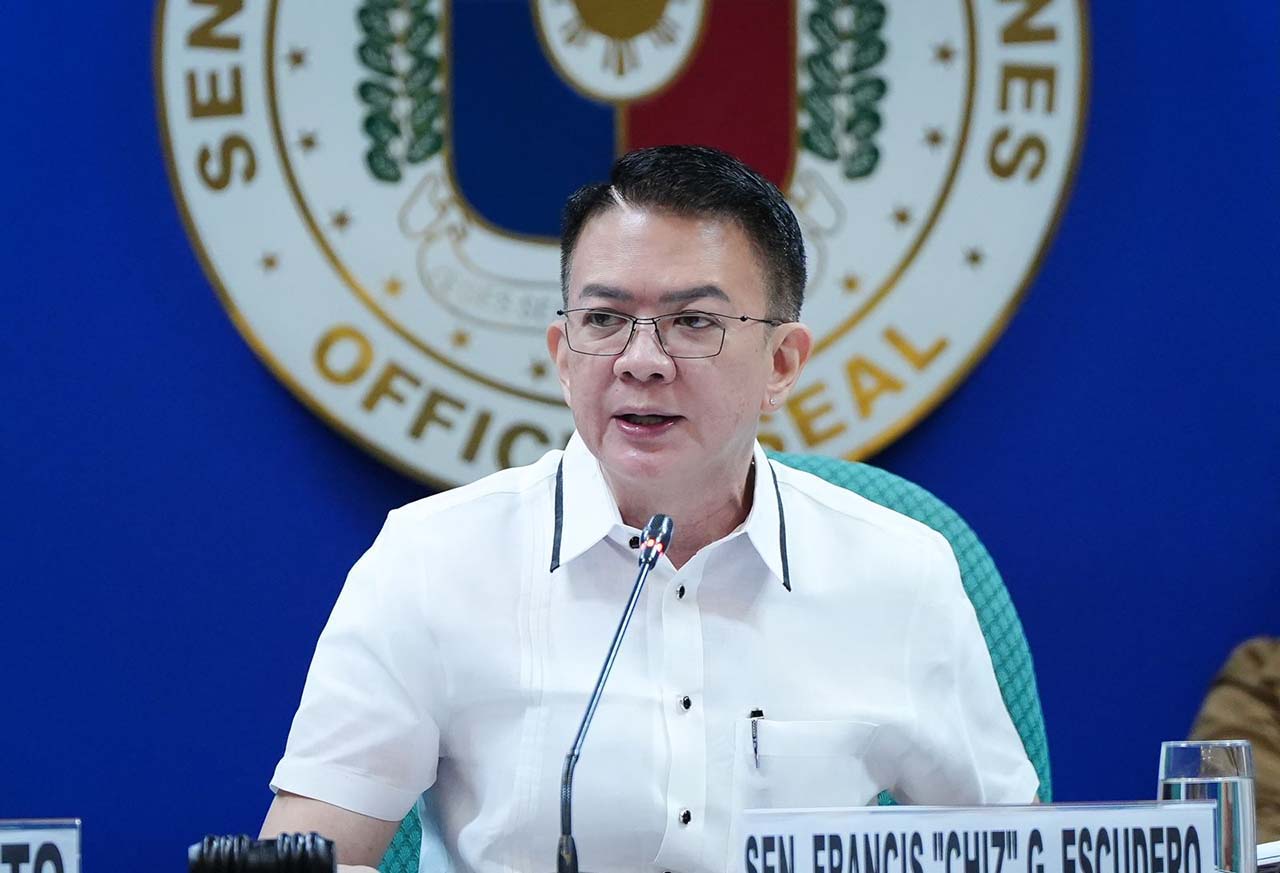
Senator Francis “Chiz” Escudero has proposed a nationwide ban on gambling-related advertisements and sponsorships to curb excessive and irresponsible gambling behavior while protecting minors and other vulnerable groups.
Escudero said the measure mirrors the country’s earlier approach to the tobacco industry under Republic Act 9211, or the Tobacco Regulation Act of 2003, which imposed sweeping restrictions on advertising to safeguard public health.
“It’s about time that we regulate the gambling industry the same way we regulated tobacco two decades ago,” he said upon filing of Senate Bill No. 2347, noting that both sectors pose significant risks when promotions become pervasive and youth targeted.
RA 9211, which Escudero supported during his tenure in the House of Representatives, prohibited tobacco advertising across print, broadcast, electronic, and outdoor media and barred the use of celebrity endorsements and branded placements in entertainment content, which proved to be effective in reducing undue exposure among minors and non-adult smokers.
Escudero’s SB 2347 seeks to apply a similar standard to gambling promotions by banning advertisements on television, radio, print, online, and social media platforms, including celebrity endorsements and influencer campaigns. The bill also calls for responsible gambling advisories in authorized consumer communications to remind the public of the risks of compulsive gaming.
The senator also cited the recent initiative of the Ad Standards Council (ASC), which voluntarily issued a self-regulation circular requiring its members to ban gambling imagery and paraphernalia across all media platforms.
“My bill shall institutionalize this effort by placing the restrictions under a national legal framework, ensuring uniform enforcement and preventing gaps in regulation,” he stressed.
While the gambling industry contributes significantly to government revenues, employment, and tourism, “it has likewise fueled advertisements, promotions, sponsorships, marketing, and other analogous consumer communications that are becoming increasingly pervasive, sophisticated, and targeted,” Escudero said.
The veteran legislator warned that the growing visibility of gambling‑related services “presents significant public mental and physical well‑being and socioeconomic concerns, particularly with respect to undue exposure, excessive, compulsive, and irresponsible gambling behavior.”
In the bill’s explanatory note, the senator cited the rapid expansion of online and digital gaming platforms, with the Philippine gambling industry recording some P396.13 billion in gross gaming revenues for Fiscal Year 2025, as evidence of its record‑breaking growth.
He said the measure aims to balance economic gains with social responsibility, while holding gambling operators and advertisers to higher ethical standards.
To ensure orderly implementation, SB 2347 provides a one-year transition period upon the law’s passage for gambling operators and advertisers to phase out existing materials and align their operations with forthcoming regulations, an approach will allow agencies and stakeholders to adjust compliance mechanisms before full enforcement takes effect, minimizing disruption while strengthening oversight, Escudero said.
Violations of the advertising ban will carry escalating penalties: a fine of up to P200,000 or imprisonment of up to one year for the first offense; P300,000 or up to two years for the second; and P500,000 or up to three years for the third, along with revocation of business permits or licenses.
Meanwhile, corporate officers and foreign nationals found liable will face corresponding sanctions, including deportation.
The Bicolano senator said the imposition of penalties is “only to ensure its effective implementation,” underscoring that deterrence is essential to protect public welfare and uphold the integrity of the law.
The bill also mandates an education and awareness campaign to promote responsible gambling and inform the public about available mental‑health support and consumer protection programs. Government agencies will be tasked to develop sustained information drives that highlight the risks of compulsive gaming and encourage informed decision‑making among players.
Escudero said the measure ultimately seeks to “foster a more responsible gaming environment, protect minors and vulnerable persons, promote informed consumer choice, and advance public interest.”